
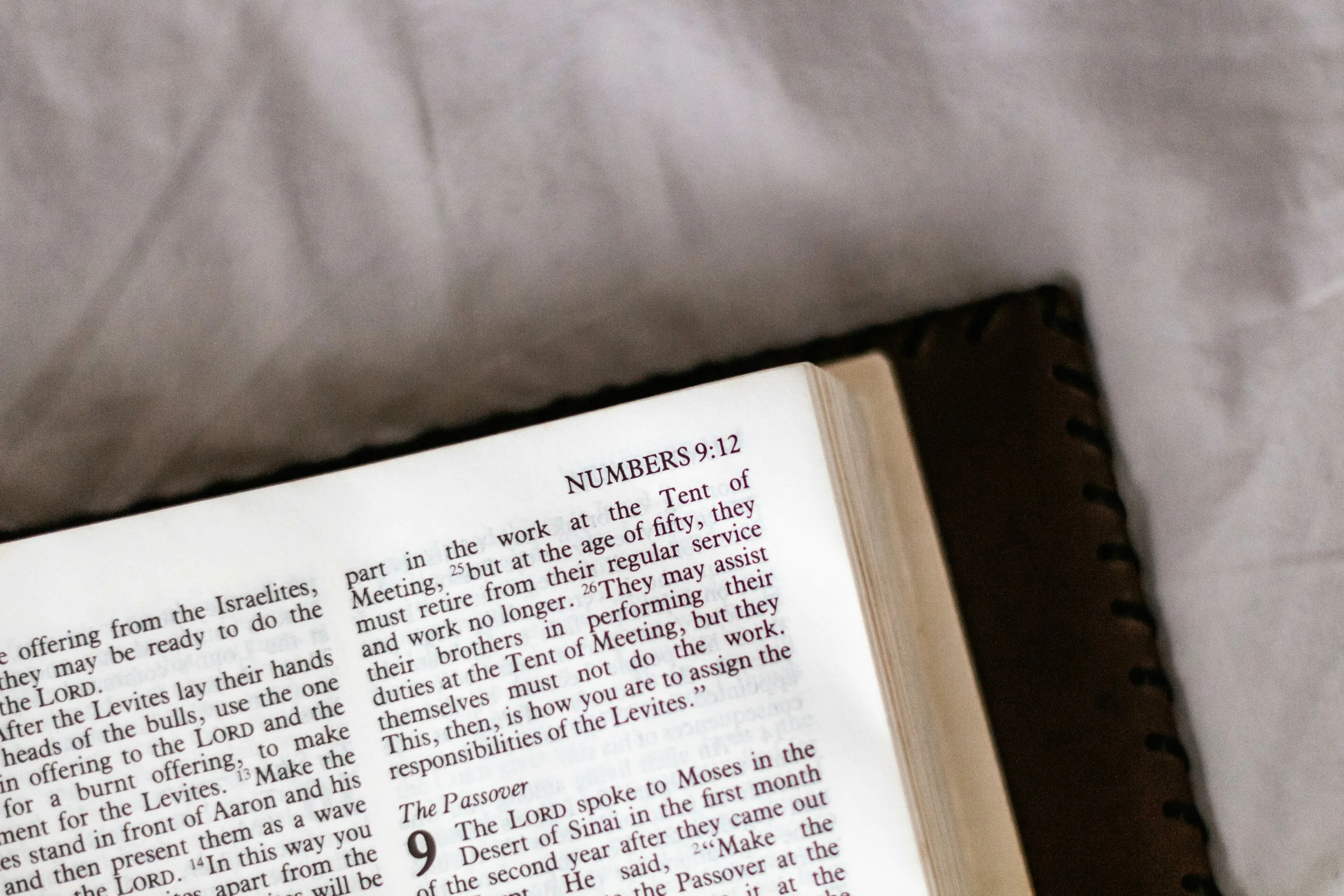
Topic: Nazirite Vow (Numbers 6)
Les Paul was known as the "Architect of Rock and Roll" and for inventing the solid body electric guitar. In 1948, Paul’s passion for the guitar almost came to a tragic end. While driving on a bridge in Oklahoma, his car skidded off into a river and his right arm was shattered. Doctors told Paul they could save his arm, but he would never play the guitar again.
Paul gave the surgeons a suggestion. To set his arm at a slightly less than 90-degree angle so he could still cradle his guitar. That’s what they did. So, for the rest of his life, Les Paul could not throw, reach, or raise his right arm. It didn’t matter to him; he could play the guitar. Maybe we should ask the Lord to remold us and set us so that all we can do is fulfill our passion to serve Him. The Nazirite Vow resets our life to intentionally serve Christ.
The Nazirite/Nazarite vow is taken by individuals who have voluntarily dedicated themselves to God. The vow is a decision, action, and desire on the part of people whose desire is to yield themselves to God completely. Nazirite simply means “to be separated or consecrated.” The Nazirite vow, which appears in Numbers 6:1-21, has five features.
First, the individual enters this vow voluntarily or called by God at birth. The Bible says, "Speak to the Israelites and say to them: 'If a man or woman wants to make a special vow, a vow of separation to the LORD as a Nazirite’” (Numbers 6:2). This shows that it is individuals who take the initiative to consecrate themselves to the Lord. There is no divine command involved. While generally done by the individual by his own choice, two individuals in the Old Testament, and one in the New Testament, were presented to God by their parents. Samuel and Samson in the Old Testament (1 Samuel 1:8-28; Judges 13:1-5), and John the Baptist in the New Testament received the Nazirite vow from birth (Luke 1:13-17).
Second, both men and women could participate in this vow, as Numbers 6:2 indicates, “a man or woman.” The Nazirite vow was often taken by men and women alike purely for personal reasons, such as thanksgiving for recovery from illness or for the birth of a child. However, under the Mosaic law, the vow or oath of a single woman could be rescinded by her father, and that of a married woman by her husband (Numbers 30).
Third, the vow had a specific time frame, a beginning and an end as these two statements indicate: “Throughout the period of his separation he is consecrated to the LORD... Now this is the law for the Nazirite when the period of his separation is over” (Numbers 6:8, 13a). So, the Nazirite vow usually had both a beginning and an end.
Fourth, there were specific guidelines and restrictions involved with the Nazirite vow. Three guidelines are given to the Nazirite. Numbers 6:3-7 tells us that he/she was to abstain from wine or any fermented drink, nor was the Nazirite to drink grape juice or eat grapes or raisins, not even the seeds or skins. Next, the Nazirite was not to cut his hair for the length of the vow. Last, he was not to go near a dead body, because that would make him ceremonially unclean. Even if a member of his immediate family died, he was not to go near the corpse.
Numbers 6:13-20 shows the procedure to follow to complete the vow. A sacrifice was made (vv.13-17), the candidate’s hair was cut and put on the altar, and the priest did the final task of completing the sacrificial process, which ended the vow (v. 20). This section concludes with the statement, “This is the law of the Nazirite who vows his offering to the LORD in accordance with his separation, in addition to whatever else he can afford. He must fulfill the vow he has made, according to the law of the Nazirite” (6:21).
Although the Nazirite vow is an Old Testament concept, there is a New Testament parallel to the Nazirite vow. In Romans 12:1-2 Paul states, “Therefore I urge you, brethren, by the mercies of God, to present your bodies a living and holy sacrifice, acceptable to God, which is your spiritual service of worship. 2 And do not be conformed to this world, but be transformed by the renewing of your mind, so that you may prove what the will of God is, that which is good and acceptable and perfect.” For Christians, the ancient Nazirite vow symbolizes the need to be separate from this world, a holy people consecrated to God (2 Timothy 1:9; 1 Peter 1:15).
*Information for understanding the Nazirite Vow from www.gotquestions.org
See you Sunday,
Dr. Scott Kallem